
What Happens Behind the Scenes of a Professional Translation Project
The finest craftsmanship is often found in the details — and professional translation is no different.
A professionally translated document is the result of much more than translation alone. Behind every finished project is a carefully managed process involving project planning, experienced linguists, independent review and quality assurance. Every stage has a purpose, helping to ensure the final translation is accurate, natural and ready for its intended audience.
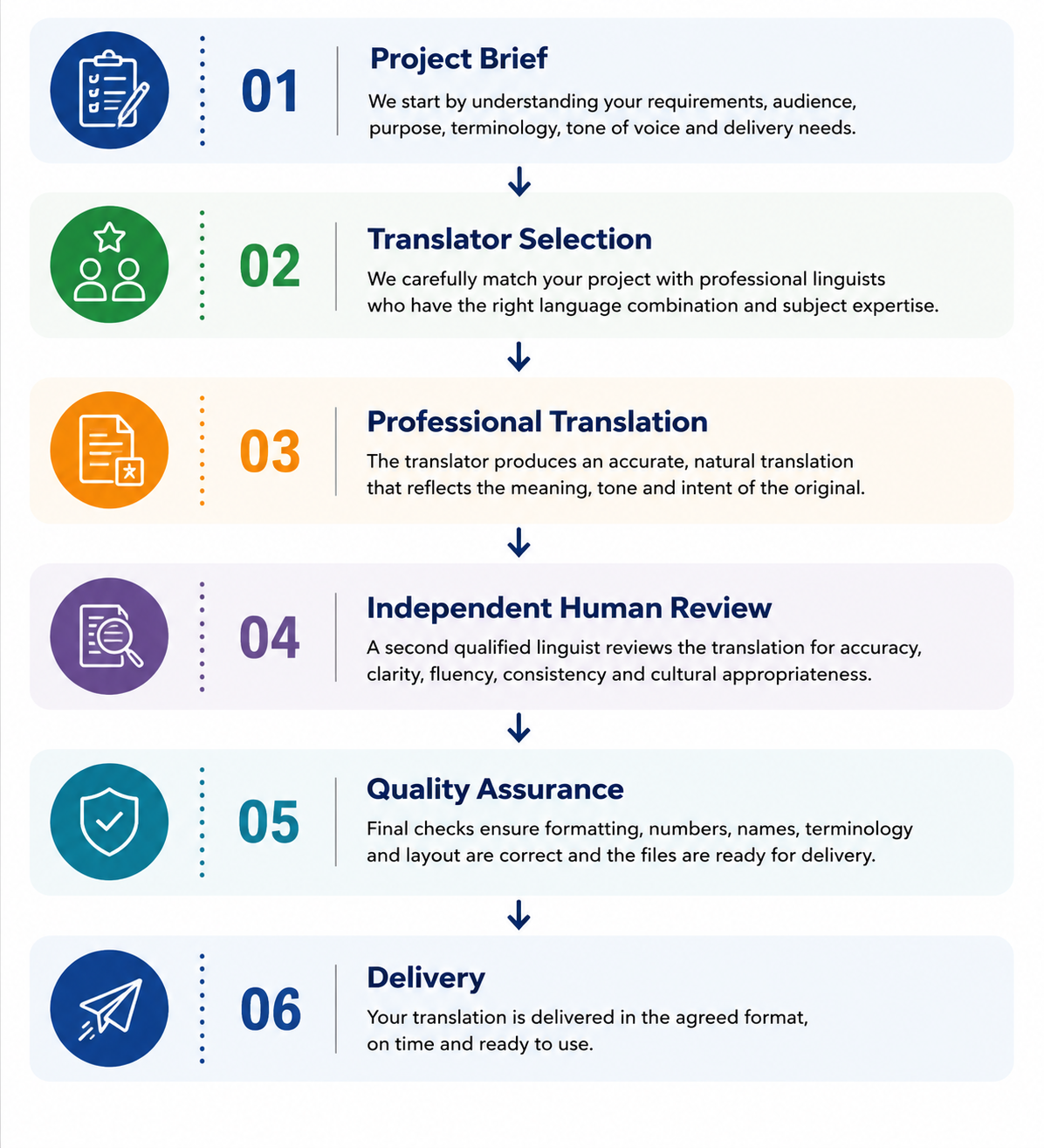
Here's a look behind the scenes at what typically happens during a professional translation project.
Step 1: Understanding the Project
Every successful translation begins with understanding the client's requirements. Before any translation starts, we take time to understand the project, including:
The target language(s)
The intended audience
The purpose of the content
Any industry specific terminology
Preferred tone of voice
Delivery requirements
The more context available, the better the final translation will be.
Step 2: Selecting the Right Linguist
Professional translation isn't simply about speaking two languages. Different projects require different expertise.
A legal contract, medical report, technical manual and marketing campaign each have their own terminology, writing style and purpose. The skills required to translate a patient information leaflet, for example, are very different from those needed to localise a marketing campaign or translate engineering documentation.
That's why professional translation providers carefully match every project with linguists who have the appropriate language combination, subject expertise and experience. Working within their specialist fields allows translators to understand not only the words themselves, but also the industry terminology, context and expectations of the intended audience.
Selecting the right linguist from the outset helps ensure the finished translation is accurate, consistent and appropriate for its purpose.
Step 3: The Translation Process
Once the project begins, the translator focuses on far more than individual words.
The objective is to produce a translation that accurately reflects the original meaning whilst reading naturally in the target language. Every sentence is carefully considered to ensure it conveys not only the information, but also the intended tone, style and purpose of the original content.
Depending on the project, this may involve researching specialist terminology, resolving linguistic ambiguities, following client style guides and maintaining consistent terminology throughout the document. Where appropriate, translators may also reference previously approved translations to ensure consistency across existing content.
Throughout the process, the focus remains the same: producing a translation that communicates clearly, reads naturally and feels as though it were originally written in the target language.
Step 4: Independent Human Review
Translation is only one part of the process. Once the initial translation has been completed, it undergoes an independent human review by another qualified linguist.
This stage is about much more than identifying errors. The reviewer examines the translation with a fresh perspective, assessing how effectively it communicates the original message and whether it meets the expectations of the intended audience. During the review, careful attention is given to whether the translation:
Reads naturally in the target language
Uses consistent terminology throughout
Reflects the intended tone and style
Accurately conveys the original meaning
Is appropriate for its intended audience
The reviewer may suggest refinements to improve clarity, consistency, fluency or overall readability. Often, these are subtle changes that help the translation flow more naturally without altering the original meaning.
An independent review also provides an additional layer of quality assurance. A second linguist can identify opportunities for improvement that may not be apparent to the original translator, helping to ensure the finished translation meets the highest professional standards.
This collaborative approach is one of the reasons professional translation delivers results that are accurate, natural and ready to communicate with confidence.
Step 5: Final Quality Assurance
Before delivery, the project undergoes a final quality assurance check to ensure everything is ready for the client to use immediately.
While the linguistic review focuses on the quality of the translation itself, the final quality assurance stage verifies that every aspect of the completed project has been prepared correctly for delivery. This includes checking that:
Formatting has been maintained where required
Numbers, dates and names are accurate and consistent
Layout has been preserved for documents requiring desktop publishing
Any client-specific terminology or instructions have been followed
Files are complete, correctly named and delivered in the requested format
These final checks help ensure the translated content not only reads well, but is also professionally presented and ready to use without the client needing to make further amendments.
Although this stage often goes unnoticed, it plays an important role in delivering a polished, reliable and professional translation.
Step 6: Delivery
Once every stage has been completed, the finished translation is delivered to the client in the agreed format and within the agreed timescale.
By this point, the project has passed through multiple stages, from planning and translator selection to independent review and final quality assurance. Each stage has been designed to ensure the finished translation is accurate, natural, consistent and ready for immediate use.
From the client's perspective, the process may appear straightforward. A document is submitted, and a professionally translated version is returned.
Behind every successful project, however, is a carefully managed workflow involving experienced linguists, structured quality processes and dedicated project management. Every stage contributes to delivering a translation that not only communicates the original message accurately, but also reflects the quality and professionalism of the organisation behind it.
Why the Process Matters
Professional translation isn't the result of a single step or a single individual. It's the outcome of a carefully managed process where every stage contributes to the quality of the final translation. The result is content that feels natural, communicates clearly and allows your message to take centre stage.
A great translation isn't created in a single moment.
It's the result of hundreds of small decisions, careful reviews and expert judgement — all working together to make every word feel effortless.